


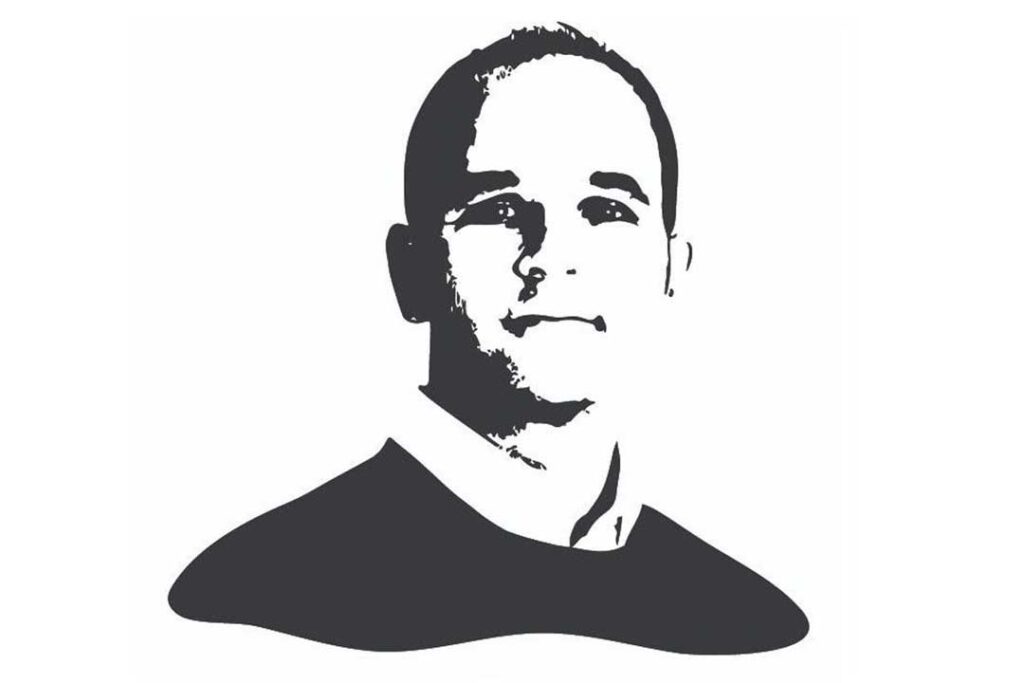
Marshal Fevzi Çakmak is one of the main characters of Turkey's liberation and founding years. He stood by Mustafa Kemal Atatürk both during the War of Independence and until his death, and also played a role in the years of transition to multi-party life.
Çakmak went to Anatolia while he was serving as Chief of Staff, that is, Chief of General Staff, and then Minister of War, that is, Ministry of Defense, in the Ottoman Empire. After the victory and the Republic, he preferred his profession rather than politics and assumed the position of Chief of General Staff, which was established in 1924. His sensitivity to keep the army away from politics went so far as to say, "I will shoot anyone who involves the military in this" during the presidential debates. With this sentence, Marshal Çakmak is a historical figure who, while it was possible for him to become the President after Atatürk, blocked his own political path and paved the way for İsmet İnönü.
In the words of his wife Fitnat Hanım, he is a humble person who sticks to his habits and reads Evliya Çelebi's travelogue when he gets bored and overwhelmed. Çakmak, whom Atatürk addressed as my pasha, is a statesman who should especially be known by those who define themselves as political Islamists and conservative democrats. Because for many years, conservative groups have portrayed Çakmak's religious personality and strong faith to the public as if he were against the secular Republic.
Fevzi Çakmak was born on January 12, 1876, in Anadolukavağı, Istanbul, as a soldier's child. His father was Artillery Colonel Ali Sırrı Bey from Çakmakoğulları, and his mother was Hesna Hanım, the daughter of Mufti Hacı Bekir of Varna. Both of them were religious people who preferred a quiet and calm family life away from political issues.
Religious, Unionist and secular
Among the issues most highlighted by political Islamists in Turkey today is Sultan Abdulhamid II and his dethronement by the Committee of Union and Progress. Fevzi Çakmak, who came from an extremely religious family loyal to the Ottoman Empire, was also religious, but he was also a Unionist. One of the most important issues in political Islam is the dethronement of Abdulhamid Khan. Çakmak would later say the following about Abdulhamit:
• “Even today, I remember my heart pounding with excitement and my heart burning with the desire to succeed in an action similar to what my grandfather attempted against the tyrannical sultan. “I was also strongly convinced that Abdulhamid Khan should be dethroned.”
A bitter letter written by Atatürk to Çakmak reflects the camaraderie of these two successful soldiers. While Colonel Mustafa Kemal was serving as the Anafartalar Group Commander in the Çanakkale War, he was fighting alongside Fevzi Çakmak's brother. It was Mustafa Kemal who informed him by letter of the news of his brother (Lieutenant Mehmet Nazif) who was martyred in the war. Çanakkale Onsekiz Mart University, Faculty of Arts and Sciences, Department of History, Assoc. Dr. This letter, which emerged within the scope of Burhan Sayilir's research on the officers martyred in the Gallipoli Wars, reflected both pain and a polite tone, while also expressing the determination and belief in fighting in the war environment.
Mustafa Kemal was not left behind
An extraordinary congress of the Union and Progress Party was held on November 1, 1918, one day after the Armistice of Mudros was signed. This was the last congress of the party. While the congress was continuing, the news that Enver, Cemal and Talat Pashas had fled abroad had a great impact both in the Congress and in the country. Being a member of the Union and Progress Party was now equated with treason.
At that time, the Freedom and Entente Party, chaired by Damat Ferit and supported by Sultan Vahdettin, was against the Committee of Union and Progress. In such a political atmosphere, the diaries of Fevzi Pasha, who tried to stay away from controversial areas by pursuing a policy of balance and prepared by Nilüfer Hatemi, are useful for understanding the difference between being a politician and a statesman. I recommend reading.
Mustafa Kemal's trust in Fevzi Çakmak, whom he met from time to time, corresponded with, and fought with as successor and successor through successive appointments, can be seen in the fact that he entrusted him with the Chief of General Staff, one of the most vital duties of the Republic. Like this secularism, military non-interference in politics He did not hesitate to implement principles such as these.
Battle-tested friendship
This trust is not in vain. Fevzi Çakmak Pasha played an important role in ensuring that the weapons and ammunition that were agreed to be delivered to the Allied Powers after the Armistice of Mudros reached Anatolia. Today, everyone should think about the fact that someone who understood the situation of the country and saw the disaster took this action in front of the eyes of the enemy, against their wishes, and as the Ottoman Chief of General Staff and then as the Minister of Defense (his deputy was İsmet İnönü).
Alev Çoşkun's “6 Unknown Months Before Samsun” I recommend you read the book. Here, the 7 most important people that Mustafa Kemal consulted before leaving Samsun while staying at house no. 250 on Şişli Halaskar Gazi Street are mentioned; One of them is Fevzi Çakmak. Since Çakmak was the Chief of General Staff at that time, he did not go to the house directly, but they met in other places.
Fevzi Çakmak's family, who moved to Ankara during the War of Independence, was thrown out of their house by the British, and his wife and children were left on the street. Finally, they went to Izmit. His wife, Fitnat Hanım, found Izmit Hat Commissioner Remzi Bey and told him that she was Çakmak's wife, and received the reply, "If you were his real wife, I would have known about it." When the truth was revealed, the family was transferred to Ankara. Today, political Islamists who try to belittle the War of Independence have lessons to learn from the fact that a person like Çakmak did not ask for help, privilege or favor even for his family.
A damp house with a leaking roof
The last and perhaps the most important note of Çakmak, one of the two War of Independence heroes to whom the Parliament gave the title of Marshal along with Atatürk, is about his visit to Atatürk's house.
One day, Mustafa Kemal visits Çakmak at his home. Ms. Fitnat is in Istanbul and at that time, the Chiefs of General Staff did not have separate lodgings, Çakmak lived in his own house. As soon as he saw the dampness on the ceiling of the living room due to the flow in the chimney, he asked: "Sir, what is the condition of this place?" Why didn't Şefik Pasha (Fevzi Çakmak's son-in-law) have this place repaired? He took her from the house and had the house repaired, saying, "This dampness is extremely disturbing. I can't leave you here."
Now, would those who claim to have adopted the Islamic way of life as a principle and live in luxury with state resources take this aspect of Çakmak, who was the Chief of General Staff until 1944 and retired due to age limit, as well as his piety, as an example, as well as the piety of Çakmak, who is taken as an example by the conservative and even Islamist segments of Turkey?
Say what?